Not a journey, but an initiation. In Wadi Rum, you become part of the desert. You taste its history, you walk through its silences, and when you return home, you carry its peace with you.
Witness to a Way of Life: A Bedouin Family
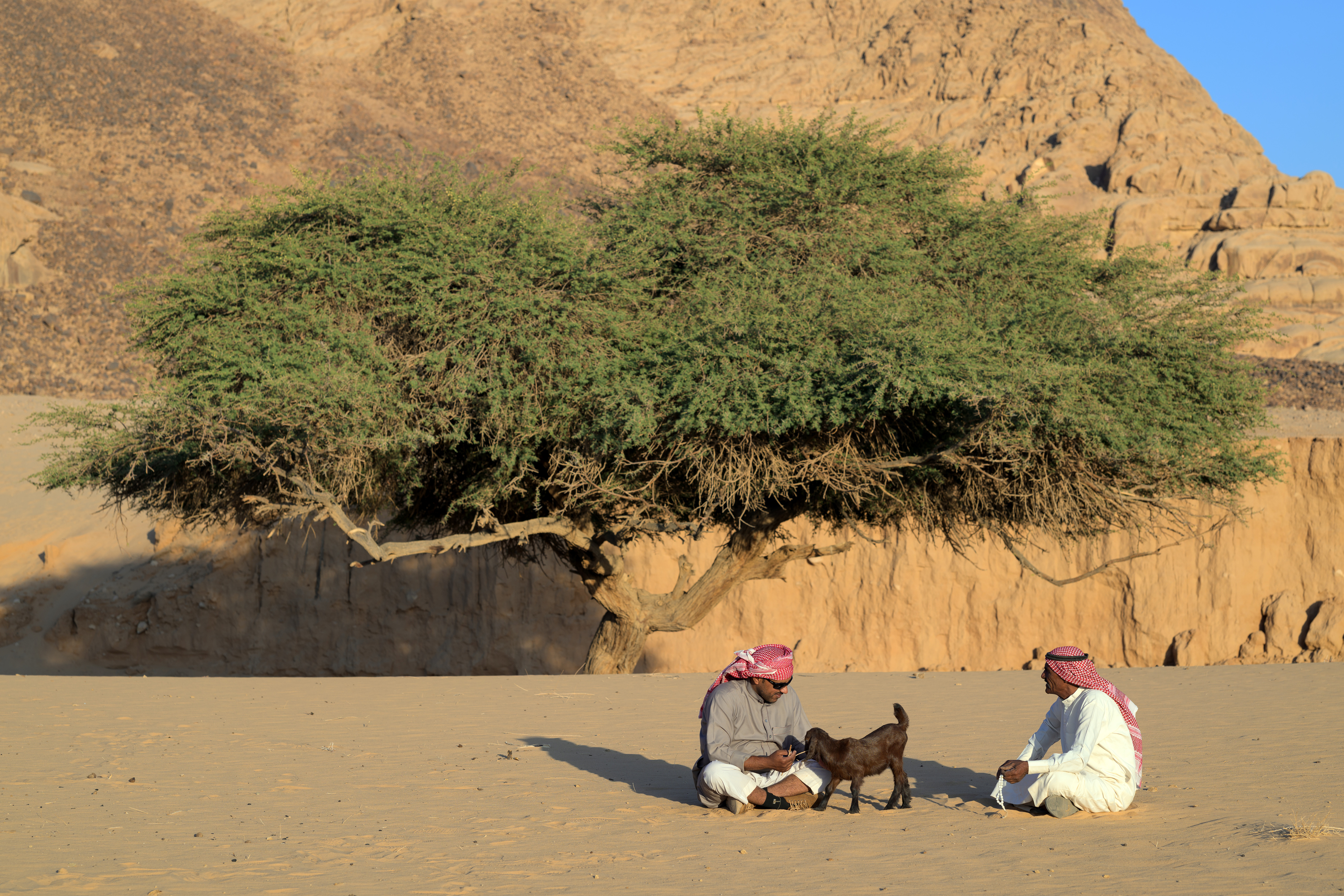
Step into a slower pace, where hospitality is not a gesture but a way of being. Spending a day with a Bedouin family isn’t a tour, it’s a quiet crossing into another world. One shaped by endurance, dignity, and a deep knowledge of the land.
The morning begins without announcement. Bread is shaped and lifted into flame, its warmth rising with the scent of flour and smoke. Hands that have done this a thousand times move without hurry.
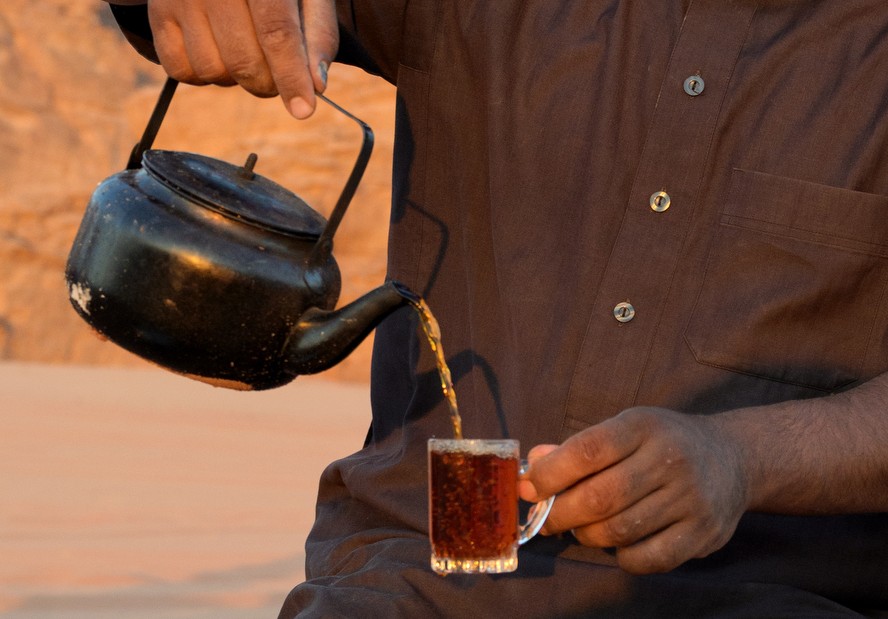
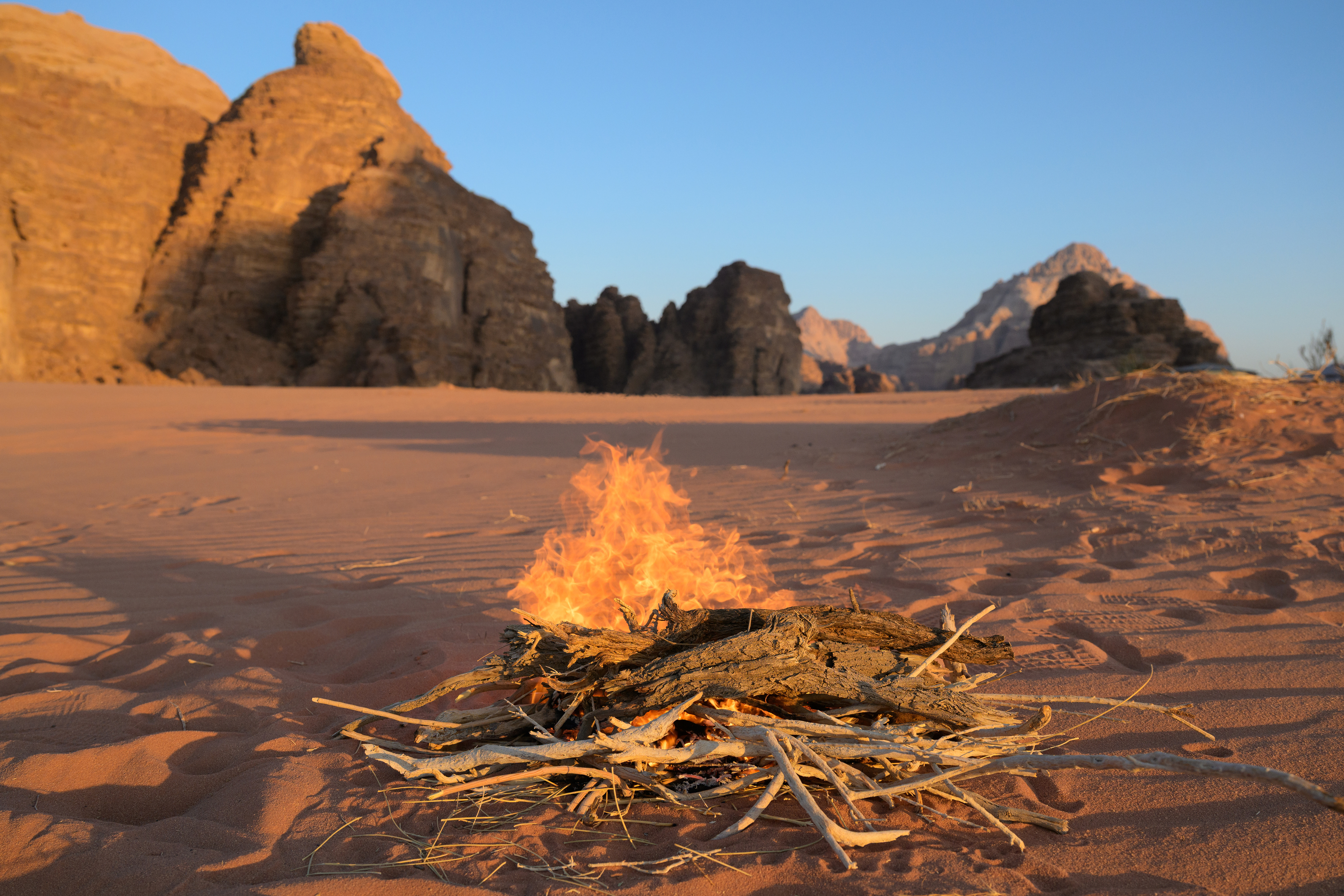
Each fold carries memory; each motion, intention. Men and women work in parallel yet distinct roles with shared joy. Goats are milked. Camel hair is spun. Nothing is wasted. Nothing is hurried. Even labor, here, has grace. Later, when the sun leans westward, you’re welcomed to sit by our fire. Coffee is roasted, ground, and brewed, not for show, but because that is what is done when a guest arrives. It is not the caffeine that matters, but the care. The slow pour.
The silence between sips. This isn’t a performance. No one is acting. It is just a family, living as they have for generations, and inviting you, for a brief, generous moment, to witness the beauty of an ordinary day.
Bedouin Cuisine: The Taste of Generosity
Jordanian cuisine is a living map of civilisations. Persian, North African, Levantine, Indian, all converging in the Bedouin hearth. Food is not simply nourishment here; it is a statement of welcome, of dignity and of shared life. At the heart of the desert table is Mansaf, a sacred dish of meat (often goat or lamb) stewed in jameed, a salted, sun-dried yogurt of goat’s milk. Served with fragrant rice and shraak, a delicate flatbread, it is offered at weddings, feast days, and when honouring guests. It is not just eaten but received with love.
After the meal, tradition flows in your cup: cardamom-scented coffee, the type that signals peace and presence, or black tea steeped with wild herbs such as mint, zaatar, and sage, all gathered from the desert’s own pharmacy.
You won’t just eat Bedouin food. You’ll learn to prepare it, mansaf, makluba, zarb baked beneath the sand, and the essential shraak. Whether cooked under stars or served in a village kitchen, every meal tells a story.
Wildlife of Wadi Rum: Beneath the Sand and Stone
To the untrained eye, Wadi Rum seems empty. But the stillness hides a symphony. Hidden among its towering cliffs and sweeping sands are around 140 species of reptiles, mammals and birds, each adapted to the desert its fierce demands.
You may glimpse the graceful ibex leaping across rock faces or catch the glinting eyes of the elusive Blandford’s fox at dusk. The majestic Verreaux’s eagle circles overhead, while the oryx, hyena, and jackal weave their lives into the fabric of this timeless place. Even the skies seem to take notice, as migratory birds crossing continents pause here, as if paying quiet homage to the peace this land offers. Many of these creatures are rare, some found nowhere else on earth, each a quiet testament to nature’s resilience and the desert’s hidden abundance.
In the folds of Bedouin tradition, even the smallest animals find their place. Local children and elders alike partake in mouse chasing, a practice both playful and practical, tracing swift trails across the sand in a game that teaches patience, speed, and the cleverness of life beneath our feet.
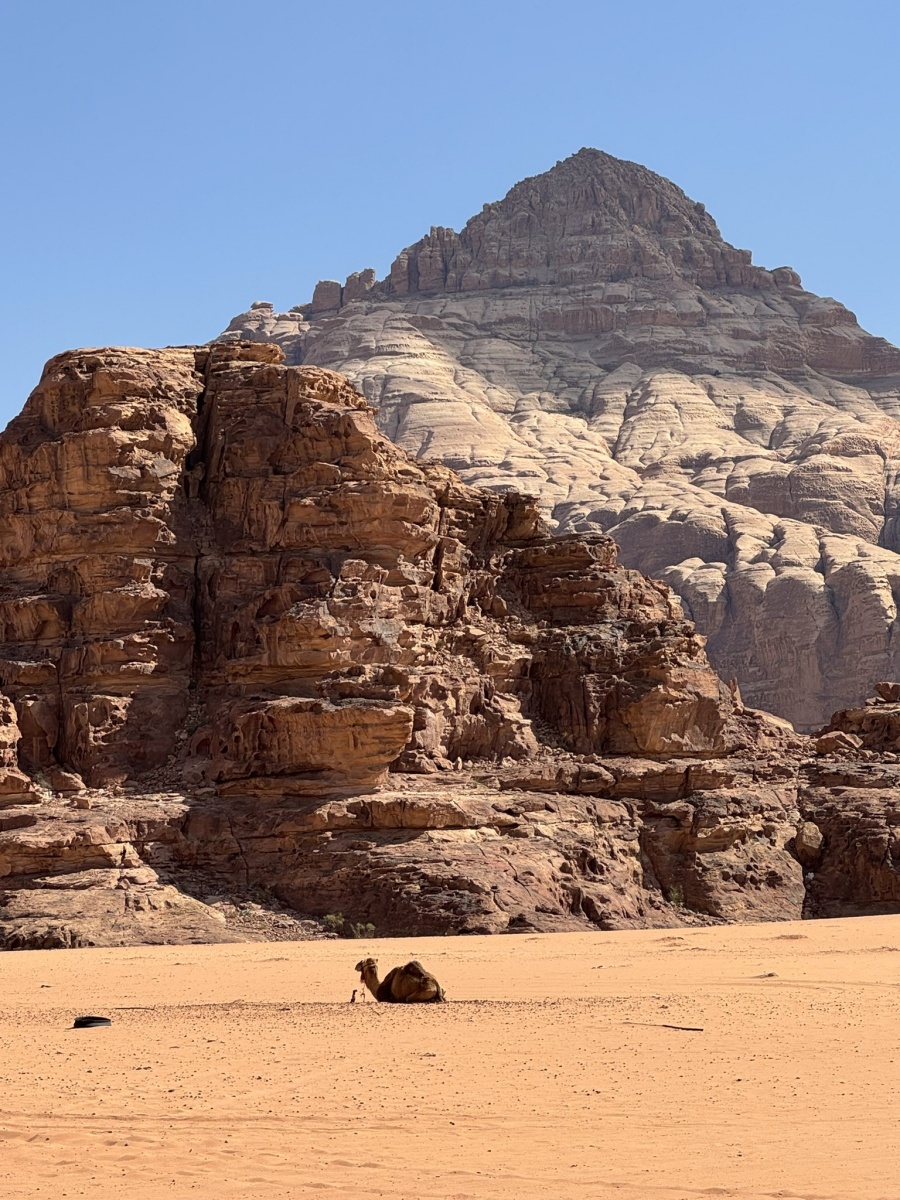
And of course, no passage through this land is complete without the slow, swaying calm of a camel ride, the original desert caravan, still steady and serene. Riding these gentle giants, you move not above the land but with it, carried across an ancient silence that remembers everything.
Desert Flora and Fauna : The Wisdom of the Wild
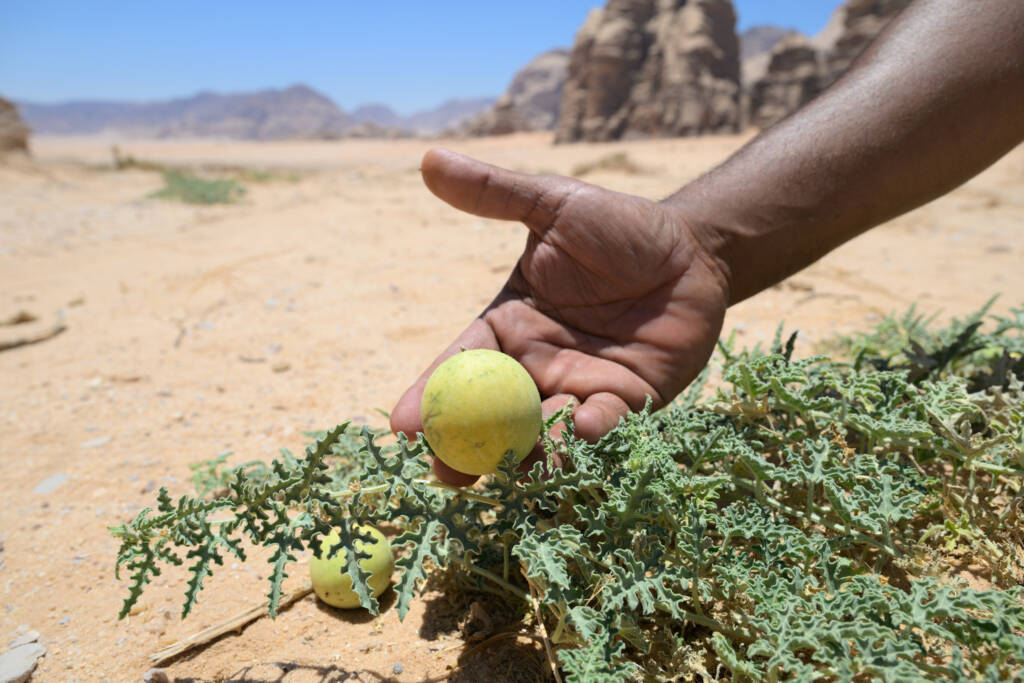
While rare desert plants such as wormwood, Greek sage and hyssop all whisper old secrets to those who know how to listen. Many of these herbs are still used in traditional Bedouin medicine, their healing powers passed down long before modern science arrived to validate them. Even the dangerous scorpions and snakes, have their place in desert life, as tools for immunity and ancient cures. Our wildlife tour follows the quiet trails. What you find depends on the season, your eye, and your willingness to look closely. But what you learn, about balance, endurance, and the sacred economy of nature, will remain.
Wadi Rum: Cinema’s Desert, History’s Heart
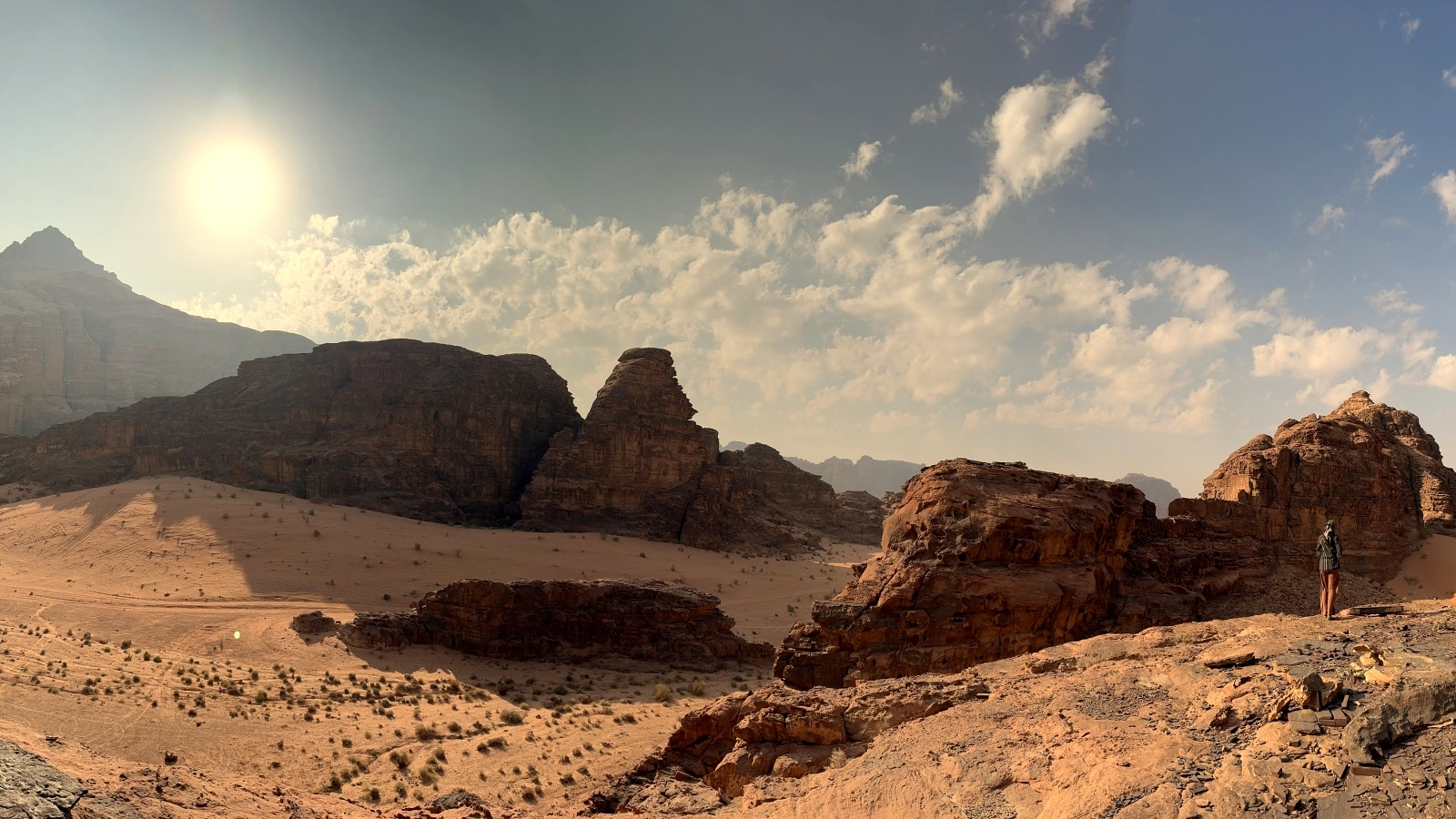
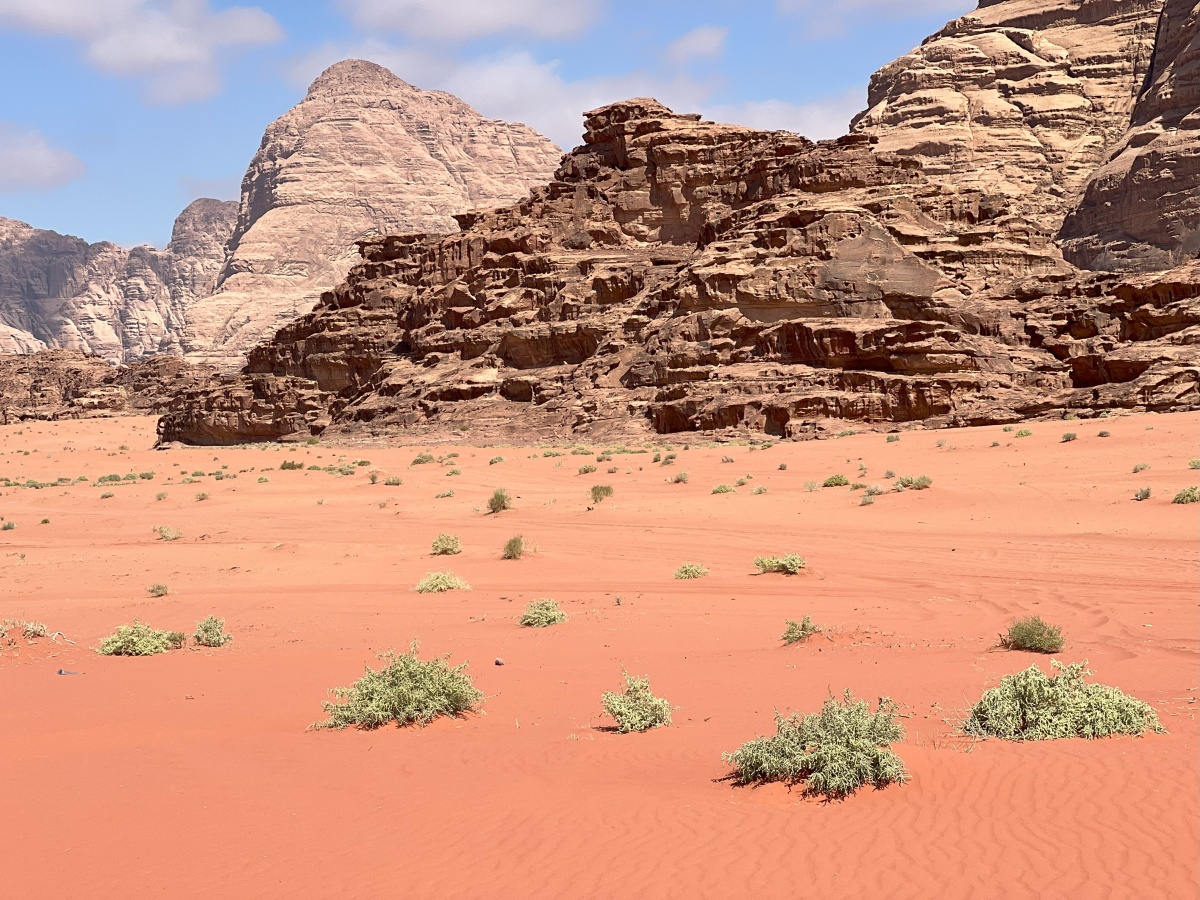
Wadi Rum does not ask for your attention, it earns it. A UNESCO World Heritage Site, this desert of red stone and open sky has captured the imagination of visionaries across time. David Lean came here to frame Lawrence of Arabia. Ridley Scott returned to shoot The Martian. They saw what many have: a landscape so vast, so unearthly, it bends the edge of reason.
But cinema is just the most recent witness. Long before the cameras arrived, others walked here, carving stories into rock faces in Thamudic, Safaitic, and Nabatean script. The Greeks came. The Arabs stayed. And through it all, the Bedu endured, desert dwellers whose knowledge of this land is deeper than any map.
T.E. Lawrence once called it “vast, echoing, and God-like”. He wasn’t exaggerating. Beneath the towering cliffs and between the shifting dunes lies a living archive. Wild ibex and golden eagles, stone carvings and lost wells, the whispers of civilisations whose names have faded but whose presence still lingers in the dust. Wadi Rum does not perform. It waits. And if you listen closely, it speaks to your soul.
We use necessary cookies for the website to function. Analytics and marketing cookies – including ads personalization and both personalized and non-personalized advertising – are used only with your consent.