

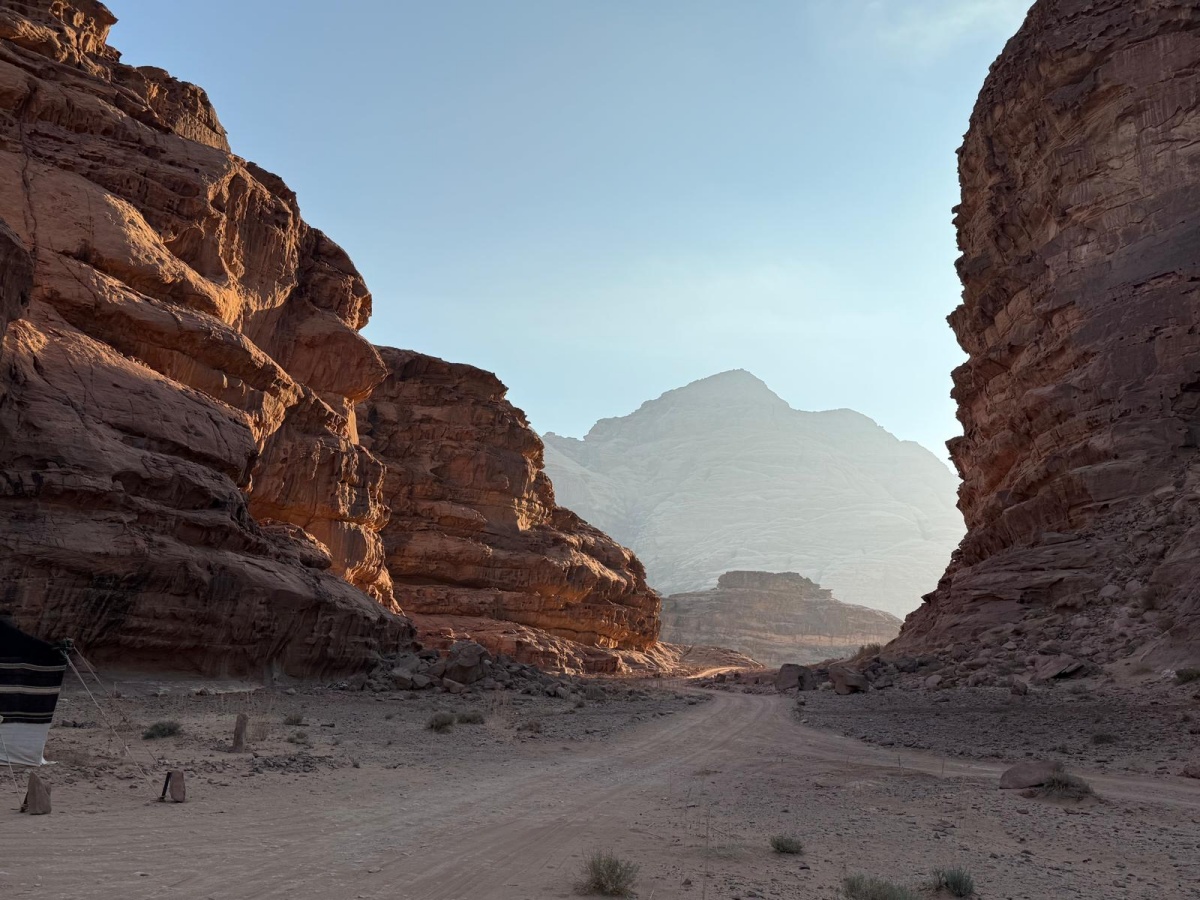
The Valley of the Moon begins with silence
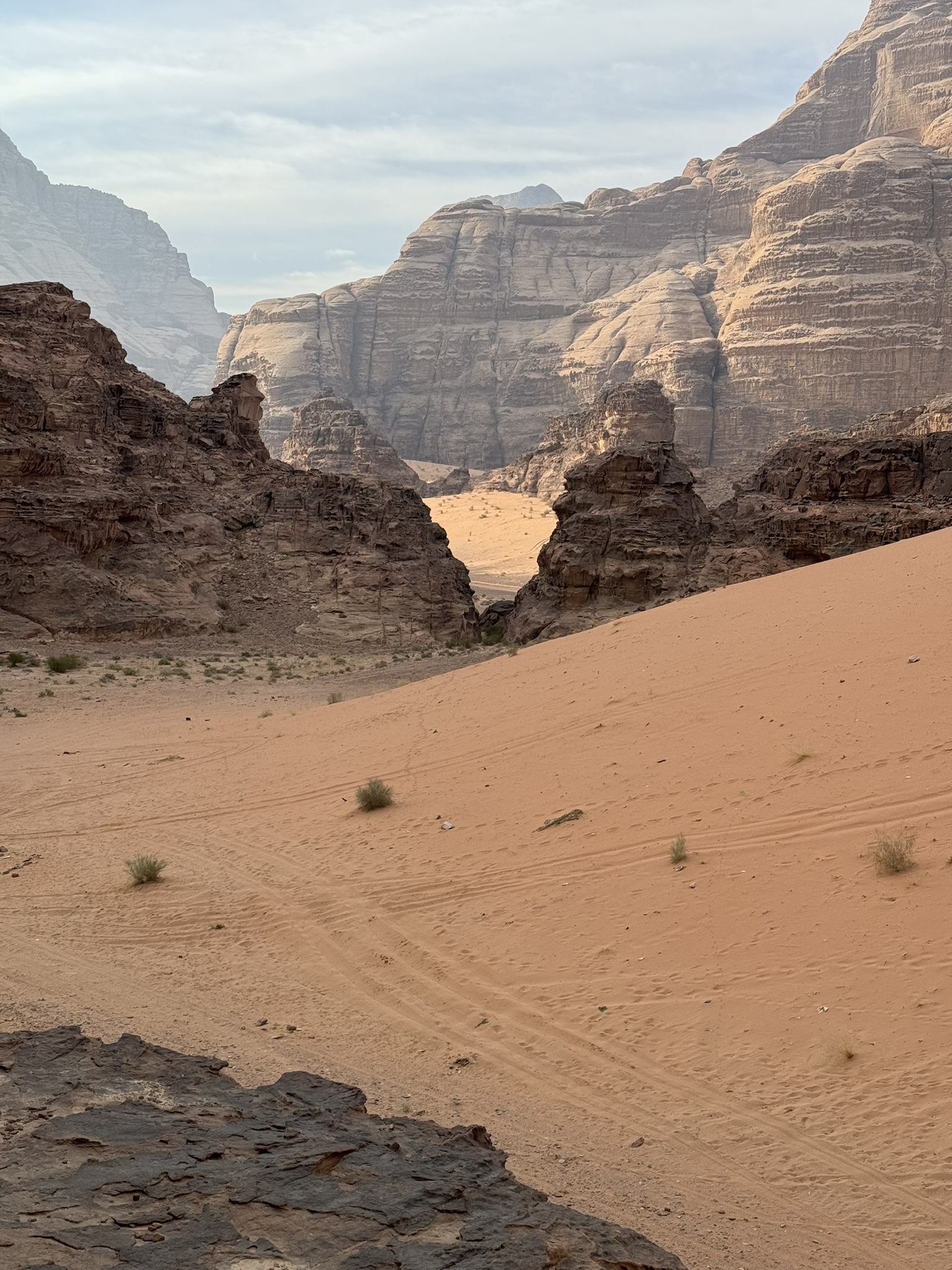
Here in Wadi Rum, 720 km² of sandstone and granite stretch toward the horizon, where the wind draws lines in the sand as it has for thousands of years. Bedouin call this place home, travellers call it ethereal, UNESCO named it a World Heritage Site in 2011. For at least 12,000 years, people left their mark here: 20,000 petroglyphs and inscriptions carved into the cliffs, stories preserved in stone.
Among the valleys rise Jabal Umm ad Dami (1,840 m), the highest mountain in Jordan, and Jabal Rum (1,734 m).
Wadi Rum is nearly the same size as New York City—a vast desert of silence and stone.
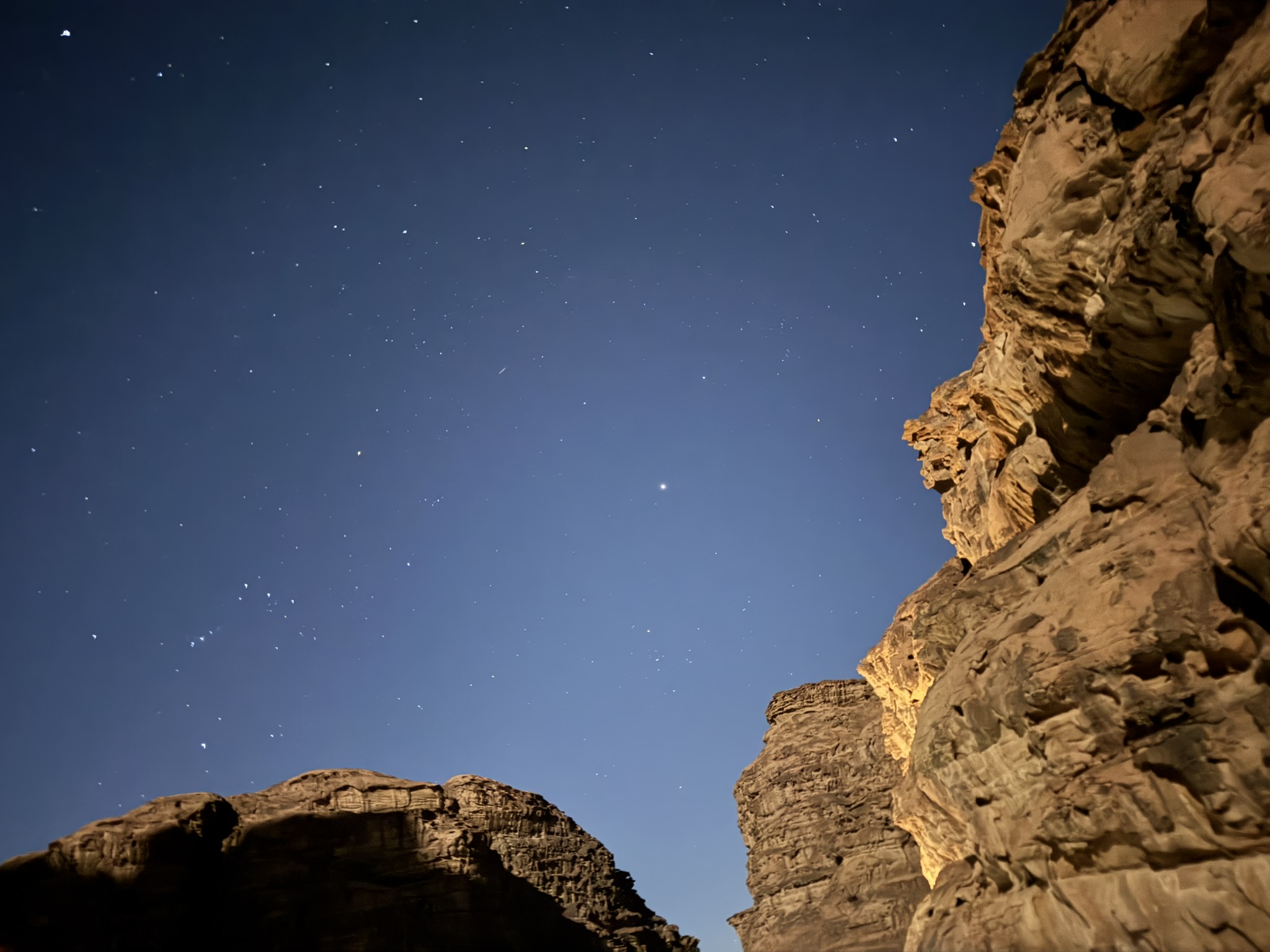
With almost no light pollution, Wadi Rum is one of the finest places on Earth to see the Milky Way which shines so bright here that it feels within reach.
Where We Are and How to Arrive
Wadi Rum lies in southern Jordan, about an hour (60km) from Aqaba and two hours from Petra. The road leads you first to the Visitor Centre, where entry is registered.
Holders of the Jordan Pass enter free.
If you wish to travel to Wadi Rum by bus, the national company .JETT offers reliable connections between Amman, Aqaba, Petra, and other major destinations.
- Aqaba to Wadi Rum: ~25 JOD
- Petra (Wadi Musa) to Wadi Rum: ~40 JOD
- Amman to Wadi Rum: ~100 JOD
Time and Sky
Spring (March–May) and autumn (September–November): 20-30 °C soft winds, gentle warmth, and are perfect for travel.
Winter (December – February): Days shine with clear sun, averaging 15–20 °C. Nights often drop toward freezing, so warm layers are needed. In recent years, temperatures have tended to be a few degrees warmer than past averages—a reminder of the wider changes in climate—making winter in Wadi Rum a gentle contrast to the cloudy skies of northern Europe.
Summer: (July – August) be ready for heat, around 35-40 °C, but nights cool under vast skies.
Annual rainfall is less than 50 mm, but rare storms can bring sudden flash floods and for a brief moment, waterfalls tumble from the red cliffs. To witness this is a rare blessing—nature offering a fleeting gift in the heart of silence.
Life that persists
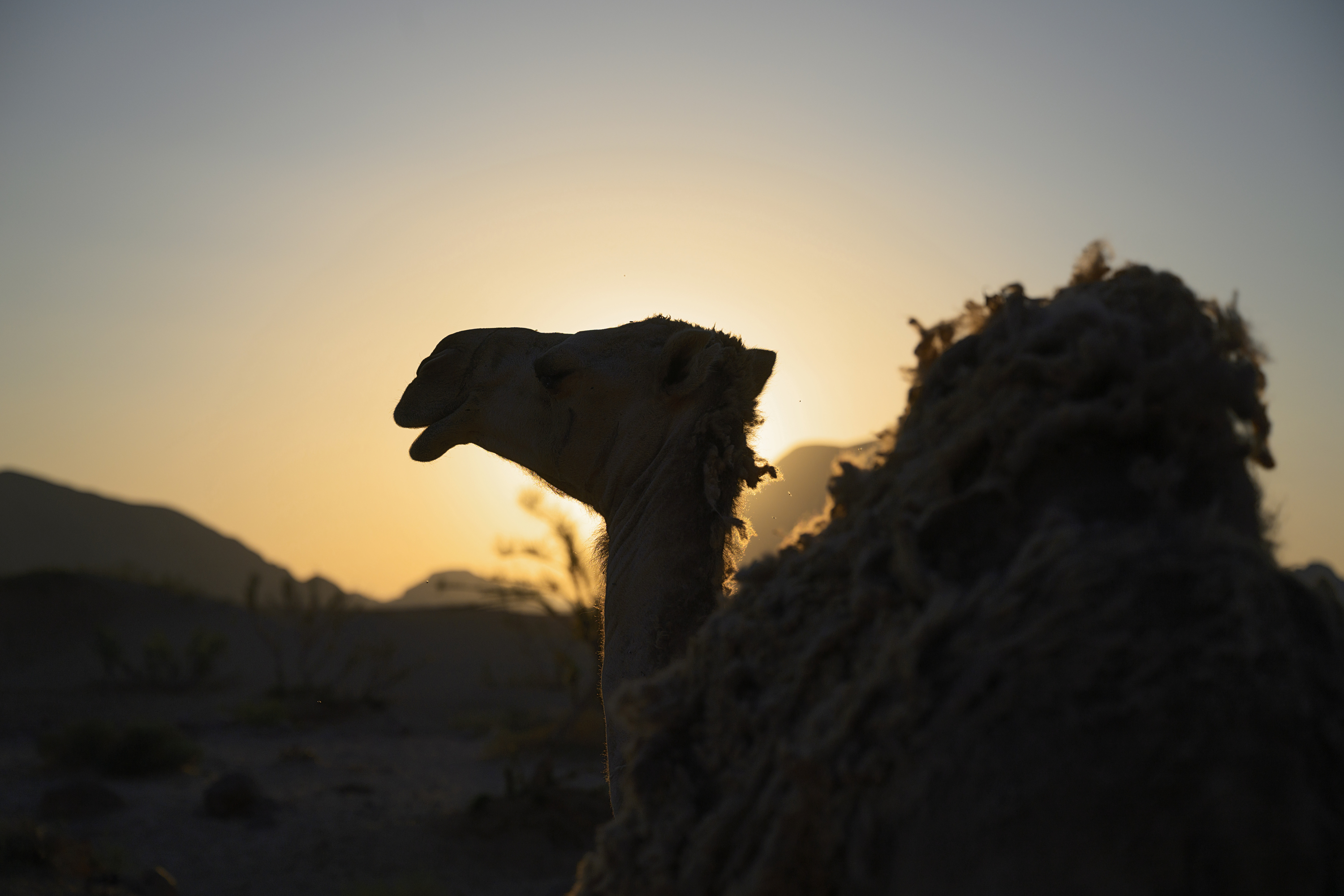
Though it appears empty, Wadi Rum holds life.
Plants: Over 180 species—acacias spreading shade, desert shrubs binding the dunes, herbs still used in Bedouin medicine.
Animals: Over 25 species – fox tracks in the sand, ibex on the cliffs, and the return of the Arabian oryx, reintroduced in 2009.
Birds: Over 115 species, including raptors circling high, desert larks weaving song into silence.
More at IUCN – Wadi Rum Protected Area
Location: Southern Jordan, ~60 km east of Aqaba, 110 km from Petra, 320 km from Amman
Size: 720 km² (about the size of New York City)
UNESCO Status: World Heritage Site since 2011 (natural & cultural)
Highest Peak: Jabal Umm ad Dami – 1,840m
Climate: Desert climate; hot summers (35–40 °C), mild winters (15–20 °C days, near-freezing nights)
Annual Rainfall: <50 mm, rare flash floods create temporary waterfalls
Wildlife: 183 plant species, 26 mammals, 119 bird species (Arabian oryx, ibex, desert fox, raptors)
Entrance Fee: 7 JOD per adult; free with Jordan Pass; children under 12 free
Best Time to Visit: Spring (March–May) and Autumn (Sept–Nov)
The entrance fee is 7 JOD per adult. Children under 12 enter free. If you hold the Jordan Pass, entry is included at no extra cost. Payment is made at the Visitor Centre before Wadi Rum village, and card is accepted.
From Aqaba: ~1 hour by car or taxi (~25 JOD).
From Petra: ~2 hours by car or taxi (~40 JOD).
From Amman: ~4 hours by car or taxi (~100 JOD).
By Bus: JETT runs services between Amman, Aqaba, and Petra. Local minibuses also operate.
The best times are spring (March–May) and autumn (September–November) when temperatures are mild (20–30 °C). Winter days are sunny and pleasant but cold at night, sometimes rainy. Summer brings heat above 35 °C, but skies are exceptionally clear for stargazing.
Yes. Wadi Rum is considered very safe. The area is managed by the Aqaba Special Economic Zone Authority and the Bedouin community, who guide most tours. Standard precautions apply—never hike alone, carry water, and inform your guide of your plans.
Wadi Rum Desert Secret Camp and Tours offer full range of activities in the desert. Popular activities include:
- Jeep tours of canyons and dunes
- Camel rides
- Hiking and climbing (e.g., Jabal Umm ad Dami)
- Stargazing (minimal light pollution)
- Bedouin culture experiences with traditional meals and stories
Wadi Rum is home to over 183 plant species, 26 mammals, and 119 bird species. Common sightings include desert foxes, ibex, raptors, and desert larks. The Arabian oryx has been reintroduced into the area.
To step into Wadi Rum is to enter a silence that speaks. It is landscape and memory, starlight and firelight, the rhythm of wind and the footprints of ancestors. For the traveller, it is both destination and lesson. In its stillness, the desert holds the vastness of life and offers a secret, if you listen.
Clothing: Wear layers—light for the day’s sun, warm for the desert night. A scarf is your companion against wind and drifting sand.
Water: Carry more than you think you need. In this dry air, thirst comes quickly.
Shoes: Choose sturdy comfort—walking shoes or light boots for sand and stone.
Safety: Never wander alone without telling your guide. The desert’s vastness is beautiful but can be disorienting.
Photography and filming welcome. We ask quiet respect in community spaces. Check Jordan regulations for bringing in drones or binoculars. They are changing from time to time.
Respect: This land is heritage and home. Leave no trace, listen to the silence, and honor the Bedouin way.
Cash: It is wise to carry some Jordanian dinars, as card machines are not always available. A small tip, if you wish, supports the community and the extra care of your guides.